Tampilkan postingan dengan label Federalist Party. Tampilkan semua postingan

Minggu, 02 Februari 2014

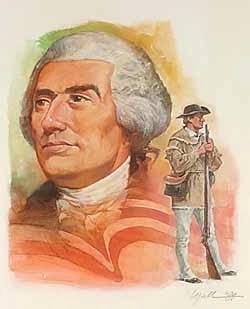
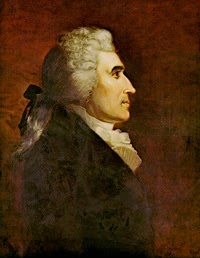
John Eager Howard - Revolutionary War Patriot


John Eager Howard
Captain, Second Maryland Battalion,
Flying Camp, Continental Army
Colonel, 3rd Maryland Regiment
Major General, Third Division, Maryland Militia
Member, Continental Congress
President, Maryland State Senate
Governor of Maryland
U.S. Senator from Maryland
Committee of Supply, Baltimore City,
War of 1812
1816 Federalist Party candidate
for Vice President. 


(Editor's Note - For a change of pace this winter we will do profiles of some of the Federalists who helped create this great nation. They gave us Liberty. But would they even recognize the centralized, authoritarian and socialistic Big Brother nation that calls itself the United States?)


John Eager Howard (June 4, 1752 – October 12, 1827) was an American soldier and politician from Maryland. He was elected as governor of the state in 1789, and served three one-year terms. He also was elected to the Continental Congress, the Congress of the United States and the U.S. Senate. He was born in and died in Baltimore County. Howard County, Maryland, is named for him.

Howard was Maryland’s first Federalist Governor, a military hero, politician, patriot, and public servant, was born at 'The Forrest,' in Baltimore County on June 4, 1752, the son of Cornelius and Ruth (Eager) Howard.

His ancestor, Joshua Howard, had received a grant of land in Baltimore County about 1685, and his family had subsequently added to these holdings. His father was a man of sufficient wealth to enable the future governor to secure a good education under private tutors.

The American Revolution

When the Revolutionary War began, he was commissioned a captain in the 'Flying Camp' of the Second Maryland Battalion.  While he was with this unit, he fought at Battle of White Plains in New York.

Howard was promoted to major in the Maryland Fourth Regiment.  His troops performed superbly at the Pennsylvania Battle of Germantown in October 1777.

In June 1778 Howard's Maryland regiments fought at the New Jersey Battle of Monmouth.  An 11,000 man Continental Army under General George Washington attacked the rear of the 15,000 man British Army column commanded by Lieutenant General Sir Henry Clinton as they left Monmouth Court House (modern Freehold Borough).

Both armies held the field, but the British commanding General Clinton withdrew undetected at midnight to resume his army's march to New York City.

While Cornwallis protected the main British column from any further American attack, Washington had fought his opponent to a standstill after a pitched and prolonged engagement; the first time that Washington's army had achieved such a result. The battle demonstrated the growing effectiveness of the Continental Army after its six month encampment at Valley Forge.

In 1778, he was promoted to the rank of lieutenant colonel in the Fifth Regiment and in the following year he transferred to the Second Regiment.

Howard Participated in the fighting at Battle of Camden in South Carolina.  There he gained a reputation for his ability.

Battle of Cowpens

He was awarded a silver medal by Congress for his leadership at the 1781 South Carolina Battle of Cowpens, during which he commanded the 3rd Maryland Regiment, Continental Army.

Realizing that poorly trained militia were unreliable in battle, especially when they were under attack from cavalry, Commanding General Daniel Morgan did not tell them to stand and fight. Instead, he asked the militia to fire two volleys and then withdraw around the left, so he could have them re-form in the rear, behind the third line, under cover of the reserve (light dragoons commanded by William Washington and James McCall). The movement of the militia in the second line would mask the third line to the British.

The third line, on the hill, was manned by his best troops: about 550 men consisting of Continentals from Delaware and Maryland, and experienced militiamen from Georgia and Virginia. Colonel John Eager Howard commanded the Continentals and Colonels Tate and Triplett the militia. The goal of this tactic was to weaken and disorganize Tarleton's forces (which would be attacking the third line uphill) before attacking and defeating them.

Howard’s men would not be unnerved by the militia’s expected move, and unlike the militia they would be able to stand and hold, especially since the first and second lines, Morgan felt, would have inflicted both physical and psychological damage on the advancing British before the third line came into action.

Battle of Cowpens

Battle of Cowpens

American counterattack under Colonel John Edgar Howard at
Cowpens, the second phase of the Battle of Cowpens.

Morgan's stratagem worked perfectly. The British drove in successive lines, anticipating victory only to encounter another, stronger line after exerting themselves and suffering casualties. The depth of the American lines gradually soaked up the shock of the British advance.

The British—with 40% of their casualties being officers—were astonished and confused. They reformed and continued to advance.

The 71st Highlanders were ordered to flank the American right. John Eager Howard spotted the flanking movement and ordered the Virginia militiamen manning the American right to turn and face the Scots. However, in the noise of battle Howard's order was misunderstood and the militiamen began to withdraw.

It was now 7:45 am and the British had been fighting for nearly an hour. They were tired and disorganized, but they saw the militia withdrawing and believed the Americans were on the run. They charged, breaking formation and advancing in a chaotic mass. Morgan ordered a volley. Howard's militia stopped their withdrawal and made an about-face. The Virginians fired into the British at a range of no more than thirty yards, with deadly effect, causing the confused British to lurch to a halt. John Eager Howard then shouted "Charge bayonets!"

The Continentals, as ordered, then mounted a bayonet charge.
General Daniel Morgan
Morgan commanded Howard at the
crucial Battle of Cowpens.

Howard ordered the Virginia militia, whose withdrawal had brought on the British charge, to turn about and attack the Scots from the other direction.

The shock of the sudden charge, coupled with the reappearance of the American militiamen on the left flank where Tarleton's exhausted men expected to see their own cavalry, proved too much for the British. Nearly half of the British and Loyalist infantrymen fell to the ground whether they were wounded or not. Their will to fight was gone.

After the battle, Howard, holding seven swords of British officers who had personally surrendered to him, was complimented by Gen. Daniel Morgan: "You have done well, for you are successful; had you failed, I would have shot you."  Col. Howard replied: "Had I failed, there would have been no need of shooting me."

After Cowpens the army and Howard's Maryland regiments moved on to fight again at the Battle of Guilford Court House.  Commanding General Nathanael Greene placed his strongest line in the rear consisting of his regulars, included the Virginian Regiment, Delaware infantry, and the 1st and 2nd Maryland regiments.  The battle had lasted only ninety minutes, and although the British technically defeated the American force, they lost over a quarter of their own men.

Seeing this as a classic Pyrrhic victory, British Whig Party leader and war critic Charles James Fox said "Another such victory would ruin the British Army!"

The Maryland regiments continued on to press the British at the Battle of Hobkirk's Hill.  The battle was one of four contests in which Greene met tactical defeat, yet his overall strategy was successful in depriving the British of all South Carolina except Charleston.

Colonel Otho Holland Williams' two Maryland battalions under Lieutenant Colonel John Eager Howard and Major Henry Hardman served General Greene again in the September 1781 Battle of Eutaw Springs in South Carolina.  In that fight Howard was severely wounded in a bayonet charge.

Greene's force, with around 2,200 men, now approached the British camp as they deployed their force. When the Americans realized they were approaching the British force, they formed two lines, with the militia in the front line and the North Carolina, Maryland and Virginia regulars in the second line.

The British charged the American position and broke the center of the American forces' first line. The North Carolina Continentals in the second line reinforced the first, and were temporarily successful until they too were broken by a British charge. The Virginia and Maryland regulars then came to the aid of their comrades. This attack stopped the British advance and the British began to retreat in disorder.

The British attempt to pacify the South with Loyalist support had failed even before Cornwallis surrendered at Yorktown.

After Eutaw Springs Howard resigned his commission and returned home, leaving his mark as an outstanding military leader.

Political Career

Following his army service, Howard held several electoral political positions.  In 1785, he became a justice of the Baltimore County Court, holding the post for three years. In the following year, he was a senatorial elector from Baltimore County as well as a justice of the Baltimore County Orphans’ Court. During 1787 and 1788, he represented Maryland in the Continental Congress.

On November 21, 1788, he was elected Governor succeeding William Smallwood. Up to that time, no state governor had ever belonged to a political party, so Howard became a member of the Federalist Party, and for the rest of his life, he would be a firm and staunch supporter of its principles.

As Governor Maryland ceded a ten-mile square tract of land to the newly formed national government for the site of a national capital. Another act of the same session provided for the granting of bounty lands to the west of Fort Cumberland to the former officers and soldiers who had served during the Revolution.  During his second year in office, Maryland ratified the Bill of Rights.  In another piece of legislation provided for the payment of the State debt within six years.

After being Governor Howard served as State Senator from 1791 through 1795; and Presidential Elector in 1792.  In 1793 he became a Commissioner of the City of Baltimore, a position which involved the planning of the city stockyards and the purchasing of lands for a marketplace.

He declined the offer from President George Washington in 1795 to be Secretary of War.

Howard was elected to the 4th Congress from November 30, 1796, through 1797 as a Federalist U.S. Senator for the remainder of the term of Richard Potts, who had resigned. He was elected for a Senate term of his own in 1797, which included the 5th Congress, the 6th Congress of 1799-1801 during which he was President pro tempore, and the 7th Congress, serving until March 3, 1803.  During his time in office he faithfully supported the policies and programs of the Federalist Party.

After his Senatorial term ended, he preferred retirement to private life. Yet, he continued to be active in public life. In 1804, he was appointed Commissioner of the State Penitentiary, a post which included the preparation of a new prison. He was nominated three additional times for terms as governor, but the Legislature failed to elect him. He served on Baltimore’s Committee of Supply during the War of 1812, assisting in the raising of money and supplies for defense.
John Eager Howard
by Thomas Sully, 1834 Collection of the
Maryland Commission on Artistic Property

Howard remained a force in the Federalist Party politics until 1816.  In the 1816 presidential election, he received 22 electoral votes for Vice President as the running mate of Federalist Rufus King, losing to James Monroe and Governor Daniel Tompkins.  Rufus king and Howard were soundly defeated following which the Federalists ceased to be a major force in State politics.

After his last unsuccessful political campaign, Howard retired to his home at 'Belvedere' which he had built in 1786, making it a center of hospitality, elegance, and grandeur. He spent his last years as a retired elder statesman, contributing land to the City of Baltimore for public purposes. Howard lived until 1827. However, his health had been failing for some time.

Early in October, 1827 he caught a severe cold and died on the twelfth. Many prominent leaders attended his funeral including President John Quincy Adams, all of whom accompanied his body to its burial in Old St. Paul’s Cemetery. In compliance with his will, no inventory was made of his estate. He further desired that his personal and real estate should be sold by his executors at a public or private sale, but he bequeathed his real property to his sons.

Marriage and Family

John Eager Howard married Margaret ("Peggy") Chew, daughter of the Pennsylvania justice Benjamin Chew. Their first son, George Howard, was born on November 21, 1789 in Jennings House during Howard's term as Governor.

Howard developed the property "Waverley" at Marriottsville, Maryland for George. George Howard became a politician and was elected as governor forty years after his father's term, and four years after his death. Their second son, Benjamin Chew Howard, was also a prominent politician in Maryland, elected for four terms in the U.S. Congress. A grandson, Francis Key Howard, was a notable figure in Maryland at the start of the American Civil War.


Positioned at the corner of Howard and Eager Streets — on land that was part of his estate — the statue of John Eager Howard was a gift of the Municipal Art Society of Baltimore City. Howard was a colonel in the Continental Army, lead by General George Washington and this piece resides in the shadow of the nearby Washington Monument. Howard County is named in his honor.


Close-up of plaque on General Howard's grave.


(msa.maryland.gov)      (archive.org)      (Baltimore Sun)

(Baltimore Sun.com - Maryland)      (findagrave.com)      (Maryland.gov/msa)

(John Eager Howard)

_________________________________


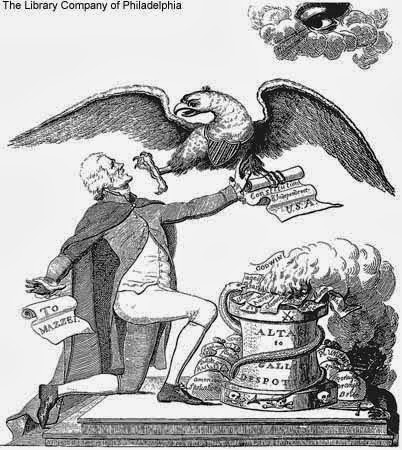
The Federalist eagle prevents Jefferson from burning the Constitution
on the alter of despotism and mob rule.

Life, Liberty and Property.
“Citizens choose your sides. You who are for French notions of government; for the tempestuous sea of anarchy and misrule; for arming the poor against the rich; for fraternizing with the foes of God and man; go to the left and support the leaders, or the dupes, of the anti-federal junto. But you that are sober, industrious, thriving, and happy, give your votes for those men who mean to preserve the union of the states, the purity and vigor of our excellent Constitution, the sacred majesty of the laws, and the holy ordinances of religion.” - -
- - - - - - - - - - - - - - - - -
- - - - - A New York Federalist Newspaper (Spring of 1800)


The Federalist Party was the first American political party. In Presidential politics the Federalists operated from the early 1790s to 1816, the era of the First Party System. Remnants of the Party lasted until 1830. The Federalists totally controlled the Federal government until 1801.

The party was formed by Alexander Hamilton, who, during George Washington's first term, built a network of supporters, largely urban bankers and businessmen, to support his Conservative fiscal policies. These supporters grew into the Federalist Party committed to a fiscally sound and nationalistic government. The United States' only Federalist President was John Adams; although George Washington was broadly sympathetic to the Federalist program, he remained an independent his entire presidency.

Read some profiles of the great Federalist leaders who helped build a free United States.


THE FEDERALIST - Jonathan Dayton - Founding Father

The Revolution of American Conservatism - The Federalist Party in the Era of Jeffersonian Democracy

THE FEDERALIST - General Philip Schuyler - Revolutionary War Patriot

THE FEDERALIST - Founding Father Jared Ingersoll

THE FEDERALIST - General William Richardson Davie

THE FEDERALIST - General Thomas Pinckney

THE FEDERALIST - Josiah Quincy III - Federalist Patriot
.
THE FEDERALIST - Robert Goodloe Harper - "Millions for defense, but not one cent for tribute."

THE FEDERALIST - Edmund Randolph - Founding Father

THE FEDERALIST - Colonel Benjamin Tallmadge - George Washington's Spy

THE FEDERALIST - Colonel John Hoskins Stone

THE FEDERALIST - Revolutionary War General Henry Lee

THE FEDERALIST - John Quincy Adams

THE FEDERALIST - Thomas Jefferson and political attack ads
.

Minggu, 29 Desember 2013

Jonathan Dayton - Founding Father


Jonathan Dayton
Founding Father of the United States
Captain, Continental Army
New Jersey delegate, Continental Congress
Delegate, Constitutional Convention
Speaker, New Jersey General Assembly
Speaker, U.S. House of Representatives
U.S. Senator from New Jersey
Federalist Party


(Editor's Note - For a change of pace this winter we will do profiles of some of the Federalists who helped create this great nation. They gave us Liberty. But would they even recognize the centralized, authoritarian and socialistic Big Brother nation that calls itself the United States?)


Founding Father Jonathan Dayton (October 16, 1760 – October 9, 1824) was from New Jersey. He was the youngest person to sign the United States Constitution.

He served as the fourth Speaker of the United States House of Representatives representing the Federalist Party, and later served as a U.S. Senator.

Dayton was born in Elizabethtown (now known as Elizabeth) in New Jersey. He was the son of Elias Dayton, a merchant who was prominent in local politics and had served as a militia officer in the French and Indian War.

He graduated from the local academy, run by Tapping Reeve and Francis Barber, where he was classmates with Alexander Hamilton and Aaron Burr.

He then attended the College of New Jersey (now known as Princeton University). He left the College of New Jersey in 1775 to fight in the revolution, though he would later receive an honorary degree in 1776.

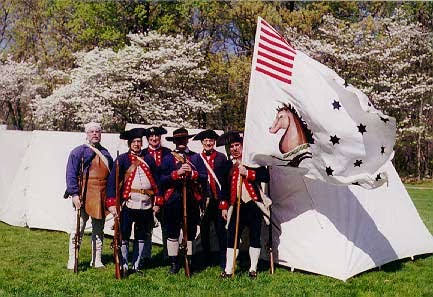
3rd New Jersey Regiment
Founding Father Jonathan Dayton dropped out of school and enlisted
in the 3rd New Jersey Regiment at the age of 15. 
Above are re-enactors of that regiment.
See more at Jersey Blues.org

Soldier in the Revolution

Dayton was only 15 years old at the outbreak of the Revolutionary War in 1775.  He served under his father (Elias ) in the 3rd New Jersey Regiment as an ensign. On Jan. 1, 1777 he was commissioned a lieutenant and served as paymaster.

He saw service under Washington fighting, at both the battles of Brandywine Creek and Germantown.  Dayton remained with Washington at Valley Forge, and helped push the British from their position in New Jersey into the safety of New York City at the Battle of Monmouth.

In October 1780, Dayton along with an uncle were captured by loyalists who held him captive for the winter.  They were released in the coming year. They again served under Dayton's father Elias in the New Jersey Brigade.

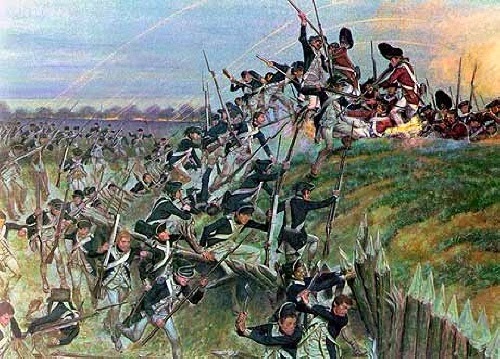
Now only 19, Dayton was promoted to rank of captain on March 30, 1780 and transferred to the 2nd New Jersey Regiment.  With that unit he took part in the ensuing Yorktown Campaign and fought at the Battle of Yorktown.

The Revolutionary War Pension files also state that he served as Aid-de-Camp to General Sullivan on his expedition against the Indians from May 1 to Nov 30, 1779.

Battle of Yorktown
American troops storming the redoubt (above).  Dayton also served with the 
2nd New Jersey Regiment where he took part in the Battle of Yorktown.
Also see British Battles.com


A Founding Father and Politician

After the war, Dayton studied law and established a practice, dividing his time between land speculation, law, and politics.

He served as a New Jersey delegate to the Continental Congress.  Then in 1787 at the age of 26 he became the youngest member of Constitutional Convention.

Dayton went on to become a prominent Federalist legislator.  He was a member of the New Jersey General Assembly from 1786–1787, and again in 1790, and served in the New Jersey Legislative Council (now the New Jersey Senate) in 1789.

Dayton was elected to the U.S. House of Representatives in 1789, but he did not take his seat until he was elected again in 1791.

During his last two terms he was Speaker of the House. He was the elected to the US Senate and served from 1799 to 1805.

Like most Federalists, he supported the fiscal policies of Alexander Hamilton, and helped organize the suppression of the Whiskey Rebellion. He supported the Louisiana Purchase and opposed the repeal of the Judiciary Act of 1801.

He became wealthy from his heavy investments in Ohio where the city of Dayton would later be named after him.

Dayton Arrested for Treason

One of the most interesting and under reported chapters of our history is the phony political "show trial" of Aaron Burr conducted in a Stalinist manner by a vindictive and paranoid Thomas Jefferson.

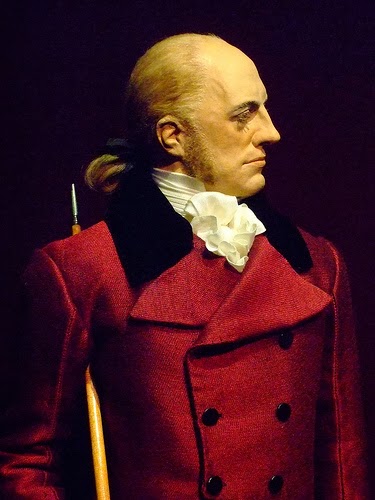
Vice President Aaron Burr
Both Burr and Dayton were arrested by
the military on Jefferson's personal order.

From day one of Jefferson's presidency he conducted endless attacks against anyone who might challenge his power starting with his own Republican Vice President, Aaron Burr.

In an effort to intimidate the Federal Courts, in a party line vote Jefferson's Republicans in Congress voted to impeach Supreme Court Justice Samuel Chase who had been appointed by George Washington himself. 

Burr as Vice President conducted a fair impeachment trial rather than a witch hunt.  Chase was acquitted by the Senate thus infuriating Jefferson.

An rather loony Jefferson worked with James Madison to personally destroy Burr.  He had been thrown out as Jefferson's Vice President and was crushed in his race for governor of New York by Jefferson's hand picked candidate.

Doing a fast forward, Jonathan Dayton lent money to Vice President Aaron Burr thus becoming involved by association in the so-called Burr "conspiracy".

The Stalinist attacks on Burr started.  In 1805 the Federal District Attorney for Kentucky, brought charges against Burr, claiming that he intended to make war with Mexico. With the help of his young attorney, Henry Clay, Burr was able to have the entire case dismissed.

Joseph Stalin had nothing on Thomas Jefferson.  Vice President Aaron Burr was arrested by the military, not civilian authorities.

The Burr arrest was based on a "warrant" personally signed by Thomas Jefferson, not a warrant issued by any court.  He was charged with the trumped up accounts of treason and trying to overthrow the government.  The charges were punishable by the death penalty.

Having charges dismissed in Kentucky, Jefferson had the military take Burr to Jefferson's home sate of Virginia for a quick trial and conviction by a "friendly" jury.

The Burr trial was a national sensation.  All the old Federalist charges that Jefferson was a French radical authoritarian were back in the news.  An American President was personally seeking the death penalty against his own Vice President.
Jonathan Dayton

Both Federalists and Republicans were coming to Burr's defense.  Joining Burr's defense team were George Washington's first and third Attorneys General Edmund Randolph and Charles Lee.  Former Republican Senator Andrew Jackson attended the trial and threatened to fight any man who insulted Burr.
.
To make sure of a conviction Jefferson gave Prosecutor George Hay a stack of pre-signed, blank Presidential Pardons.  Anyone who would testify against Burr would get a pardon . . . those who refused to testify would be open to Federal prosecution by Jefferson.  One key witness against Burr was even "reimbursed" with a $10,000 check from the Jefferson Administration for "services rendered."
.
In the middle of the trial Dayton was arrested for treason on Jefferson's orders.

In his paranoid madness Jefferson was going all out by arresting for treason (a death penalty offense) a Founding Father and former Federalist Speaker of the House.

Burr ended up being acquitted of all charges.  Only at that point were all treason charges against Dayton dismissed.

Late life and family

He married Susan Williamson and had two daughters. Susan's Revolutionary War Pension Application W.6994 states that the marriage occurred on the twenty-eighth day of March, in the year 1779.

A supporting letter, written by Aaron Ogden, a Captain in the New Jersey Brigade, states that he "was present at the marriage of the said Jonathan Dayton and Susan his wife ; which marriage ceremony was performed by the Reverent Mr. Hoyt, a Presbyterian Clergyman... in the fore part of spring of the year seventeen hundred and seventy nine (1779) while the New Jersey Brigade lay at Elizabethtown in the Borough of Elizabeth and state of new Jersey."

After the Burr trial he resumed his political career and was elected to the New Jersey Assembly 1814-1815.

Dayton died Oct. 9, 1824 in his New Jersey hometown and was interred in an unmarked grave now under the present St. John's Episcopal Church in Elizabeth which replaced the original church in 1860.

Shortly before his death, the Marquis de Lafayette visited him, as reported in an obituary: In New-Jersey, Hon. JONATHAN DAYTON, formerly Speaker of the House of Representatives of Congress, and a Hero of the Revolution. When the Nation's Guest lately passed New-Jersey, he passed the night with General Dayton, and such were the exertions of this aged and distinguished federalist, to honor the Guest, and gratify the wishes of his fellow citizens to see, that he sunk under them ; and expired, without regret, a few days after (Columbian Centinel (Boston, MA), Oct 20, 1824, p. 2).

(Burr, Ogden and Dayton -The Original Jersey Boys)   (Jonathan Dayton)   (artworkoriginals.com)  

____________________________________


The Federalist eagle prevents Jefferson from burning the Constitution on
the alter of despotism and mob rule.

Life, Liberty and Property.
“Citizens choose your sides. You who are for French notions of government; for the tempestuous sea of anarchy and misrule; for arming the poor against the rich; for fraternizing with the foes of God and man; go to the left and support the leaders, or the dupes, of the anti-federal junto. But you that are sober, industrious, thriving, and happy, give your votes for those men who mean to preserve the union of the states, the purity and vigor of our excellent Constitution, the sacred majesty of the laws, and the holy ordinances of religion.” - -
- - - - - - - - - - - - - - - - -
- - - - - A New York Federalist Newspaper (Spring of 1800)


The Federalist Party was the first American political party. In Presidential politics the Federalists operated from the early 1790s to 1816, the era of the First Party System. Remnants of the Party lasted until 1830. The Federalists totally controlled the Federal government until 1801.

The party was formed by Alexander Hamilton, who, during George Washington's first term, built a network of supporters, largely urban bankers and businessmen, to support his Conservative fiscal policies. These supporters grew into the Federalist Party committed to a fiscally sound and nationalistic government. The United States' only Federalist President was John Adams; although George Washington was broadly sympathetic to the Federalist program, he remained an independent his entire presidency.

Read some profiles of the great Federalist leaders who helped build a free United States.


The Revolution of American Conservatism - The Federalist Party in the Era of Jeffersonian Democracy

THE FEDERALIST - General Philip Schuyler - Revolutionary War Patriot

THE FEDERALIST - Founding Father Jared Ingersoll

THE FEDERALIST - General William Richardson Davie

THE FEDERALIST - General Thomas Pinckney

THE FEDERALIST - Josiah Quincy III - Federalist Patriot
.
THE FEDERALIST - Robert Goodloe Harper - "Millions for defense, but not one cent for tribute."

THE FEDERALIST - Edmund Randolph - Founding Father

THE FEDERALIST - Colonel Benjamin Tallmadge - George Washington's Spy

THE FEDERALIST - Colonel John Hoskins Stone

THE FEDERALIST - Revolutionary War General Henry Lee

THE FEDERALIST - John Quincy Adams

THE FEDERALIST - Thomas Jefferson and political attack ads

Minggu, 01 Desember 2013

General Philip Schuyler - Revolutionary War Patriot


Philip Schuyler
Major, British Army
Colonel, New York Militia
Continental Congressman
Major General, Continental Army
New York State Senator
U.S. Senator from New York
Father-in-law of Alexander Hamilton
Federalist Party 


(Editor's Note - For a change of pace this winter we will do profiles of some of the Federalists who helped create this great nation. They gave us Liberty. But would they even recognize the centralized, authoritarian and socialistic Big Brother nation that calls itself the United States?)


Philip John Schuyler (November 20, 1733 – November 18, 1804) was a general in the American Revolution and a Federalist Party United States Senator from New York.

Philip Schuyler was born in Albany, New York, on November 20, 1733, to John (Johannes) Schuyler, Jr. (1697–1741), third generation of the Dutch family in America, and Cornelia Van Cortlandt (1698–1762).

Prior to his father's death on the eve of his eighth birthday, Schuyler attended the public school at Albany. Afterward, he was educated by tutors at the Van Cortlandt family estate at New Rochelle. He joined the British forces in 1755 during the French and Indian War, raised a company, and was commissioned as its Captain by his cousin, Lt. Governor James Delancey. Later in that war, he served as a quartermaster, purchasing supplies and organizing equipment.

From 1761 to 1762, Schuyler made a trip to England to settle accounts from his work as quartermaster. During this time his home in Albany, later called Schuyler Mansion, was built. His country estate (General Schuyler House) at Saratoga (now Schuylerville, New York) was also begun. After the war he also expanded the Saratoga estate to tens of thousands of acres, adding slaves, tenant farmers, a store, mills for flour, flax, and lumber. His flax mill for the making of linen was the first one in America. He built several schooners on the Hudson River, and named the first Saratoga.

Schuyler began his political career as a member of the New York Assembly in 1768, and served in that body until 1775. During this time his views came to be more opposed to the colonial government. He was particularly outspoken in matters of trade and currency. He was also made a Colonel in the militia for his support of governor Henry Moore.

Invasion of Canada (1775)
As commander of the Northern Department, General Schuyler helped plan and organize the American invasion of Canada.  Among those in the invasion were the Green Mountain Boys, Daniel Morgan, Benedict Arnold and a very young Aaron Burr.


Revolutionary War

Schuyler was elected to the Continental Congress in 1775.  He served until he was appointed one of four Major Generals of the Continental Army in June. General Schuyler took command of the Northern Department, established his headquarters at Albany and planned the Invasion of Canada (1775).

Soon after the Canadian expedition started Schuyler was prostrated by rheumatic gout, and the actual command devolved upon General Richard Montgomery. Schuyler returned to Ticonderoga and later to Albany, where he spent the winter of 1775-1776 in collecting and forwarding supplies to Canada and in suppressing the Loyalists and their Indian allies in the Mohawk Valley.

Philip Schuyler

Early in 1776 he directed an expedition to Johnstown, where he seized the military stores that had been collected by Sir John Johnson.

As department commanding General, he was active in preparing a defense against the Saratoga Campaign, part of the "Three Pronged Attack" strategy of the British to cut the American Colonies in two by invading and occupying New York State in 1777.

In the summer of that year General John Burgoyne marched his British army south from Quebec over the valleys of Lakes Champlain and George. On the way he invested the small Colonial garrison occupying Fort Ticonderoga at the nexus of the two lakes.

On the death of Montgomery and the failure to take Quebec the army retreated to Crown Point, and its commander, General John Sullivan, was superseded by General Horatio Gates. Gates claimed precedence over Schuyler and, on failing to secure recognition, intrigued to bring about Schuyler's dismissal.

The controversy was taken into Congress. The necessary withdrawal of the army from Crown Point in 1776 and the evacuation of Ticonderoga in 1777 were magnified by Schuyler's enemies into a retrograde movement, and, on the 19th of August 1777, he was superseded. A court martial appointed in 1778 acquitted him on every charge. He resigned from the army in April 1779.


Burned by the British
The General Philip Schuyler House was built in 29 days in November 1777. This home is now part of Saratoga National Historical Park. During the American Revolution, the British Army occupied this area. The beautiful home of American General, Philip Schuyler, was burned to ground.

Following the surrender of the British, General Schuyler lost no time in replacing his home. He rebuilt this house using much of the glass, nails, locks and hinges salvaged from the burned home. From here, the General ran his extensive business affairs.
Village of Schuylerville.org

__________________________________

Tory Plot to Kidnap Schuyler
Account of a loyalist attempt to capture the general.


Schuyler's daughter Catharine was born at Albany on the 20th of February, 1781, nine months before the surrender of Cornwallis, she was almost literally rocked in the cradle of revolution. She was baptized in the Dutch Reformed church, General and Mrs. Washington being two of her sponsors. Her name was the same as that of her mother, who was a daughter of the distinguished family of Van Rensselaer. When only six months old she was the central figure of a most romantic yet terrifying scene.

Though General Schuyler had withdrawn from the army, he was still active in the cause of his country, and the British and Tories were anxious to get possession of his person. He was aware of the fact, and a guard of six soldiers had been furnished him, three of whom were on duty at a time.
.
Nevertheless, a bold ruffian named Waltermeyer, accompanied by a gang of Tories, Canadians, and Indians, made the hazardous attempt. Just at twilight on a sultry August day the general and his family were collected in the front hall of his house in the suburbs of Albany. The three guards off duty were asleep in the basement; the others were lying on the grass outside and not very vigilant. A servant announced that a stranger wished to speak with the general at the back gate. A trap was at once suspected, the doors were instantly barred, the family ran up-stairs, and the general sprang for his arms.
.
Waltemeyer's gang surrounded the house, the three guards who were barred out fled, and the doors were soon broken in. The three soldiers below rushed up to the back hall where they had left their arms, but these had been removed by some of the family, and they were quickly overpowered. At that moment it was discovered that the infant Catrina was asleep in its cradle in the basement. Margarita, the general's third daughter (then a brave girl of twenty-two, afterwards the wife of the celebrated patroon, General Stephen Van Rensselaer), instantly rushed down the two flights of stairs, snatched up the child, and bore it to the upper rooms.
.
As she fled up-stairs one of the cut-throats flung a tomahawk at the heroic girl. It whizzed past the head of little Catrina, slightly cut the dress of Margarita, and was buried in the railing of the stair. A moment after Waltermeyer met her, but supposing her to be a servant allowed her to pass, exclaiming, "Hello, wench, where is your master?"
.
"Gone to alarm the town," replied the quick-witted girl. The general heard her, flung up a window, and called at the top of his voice,-  "Come on, my brave fellows, surround the house and secure the scoundrels!" A panic seized on the marauders, who immediately fled, carrying off their three prisoners and a large quantity of silver plate.                     
____________________________________


Later Career

Schuyler was an original member of the New York Society of the Cincinnati.

After the army he served in two more sessions of the Continental Congress in 1779 and 1780.

He was a member of the New York State Senate from 1780 to 1784, and at the same time New York State Surveyor General from 1781 to 1784 and helped to settle the New York boundary disputes with Massachusetts and Pennsylvania.

Afterwards he returned to the State Senate from 1786 to 1790.

In 1788 he joined his son-in-law Alexander Hamilton, John Jay and others in leading the Federalist movement for the ratification by New York of the new Federal Constitution.

In election of 1789, he was elected a U.S. Senator from New York to the First United States Congress, serving from July 27, 1789, to March 4, 1791. After losing his bid for re-election in 1791, he returned to the State Senate from 1792 to 1797.

In the election of 1797, he was elected again to the U.S. Senate as a Federalist and served in the 5th United States Congress from March 4, 1797 until his resignation because of ill health on January 3, 1798.

He was also active for many years as Indian commissioner. He prepared plans for the construction of a canal between the Hudson river and Lake Champlain before 1776, and, in 1792-1796, carried to a successful conclusion a more pretentious scheme for connecting the Hudson with Lake Ontario by way of the Mohawk, Oneida Lake and the Onondaga river.

He died in Albany on the 18th of November 1804.

Grave of General Philip Schuyler

Statue of General Schuyler outside Albany City Hall.


(nndb.com)        (Find a Grave.com)        (iment.com)        (Philip Schuyler)
____________________________________

The Federalist eagle prevents Jefferson from burning the Constitution on
the alter of despotism and mob rule.

Life, Liberty and Property.
“Citizens choose your sides. You who are for French notions of government; for the tempestuous sea of anarchy and misrule; for arming the poor against the rich; for fraternizing with the foes of God and man; go to the left and support the leaders, or the dupes, of the anti-federal junto. But you that are sober, industrious, thriving, and happy, give your votes for those men who mean to preserve the union of the states, the purity and vigor of our excellent Constitution, the sacred majesty of the laws, and the holy ordinances of religion.” - -
- - - - - - - - - - - - - - - - -
- - - - - A New York Federalist Newspaper (Spring of 1800)


The Federalist Party was the first American political party. In Presidential politics the Federalists operated from the early 1790s to 1816, the era of the First Party System. Remnants of the Party lasted until 1830. The Federalists totally controlled the Federal government until 1801.

The party was formed by Alexander Hamilton, who, during George Washington's first term, built a network of supporters, largely urban bankers and businessmen, to support his Conservative fiscal policies. These supporters grew into the Federalist Party committed to a fiscally sound and nationalistic government. The United States' only Federalist President was John Adams; although George Washington was broadly sympathetic to the Federalist program, he remained an independent his entire presidency.

Read some profiles of the great Federalist leaders who helped build a free United States.

THE FEDERALIST - Founding Father Jared Ingersoll

THE FEDERALIST - General William Richardson Davie

THE FEDERALIST - General Thomas Pinckney

THE FEDERALIST - Josiah Quincy III - Federalist Patriot
.
THE FEDERALIST - Robert Goodloe Harper - "Millions for defense, but not one cent for tribute."

THE FEDERALIST - Edmund Randolph - Founding Father

THE FEDERALIST - Colonel Benjamin Tallmadge - George Washington's Spy

THE FEDERALIST - Colonel John Hoskins Stone

THE FEDERALIST - Revolutionary War General Henry Lee

THE FEDERALIST - John Quincy Adams

THE FEDERALIST - Thomas Jefferson and political attack ads
.